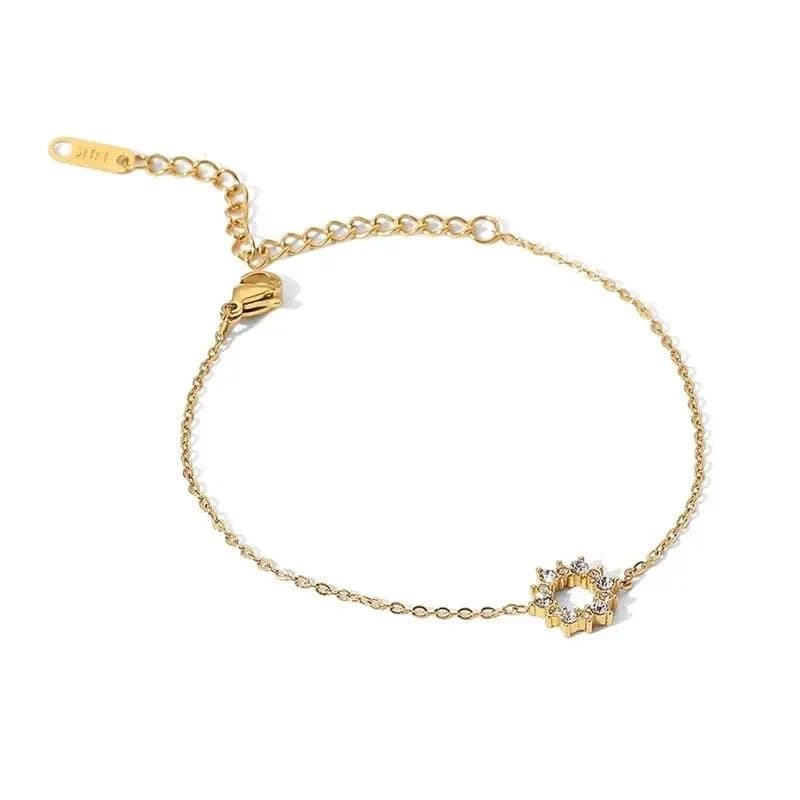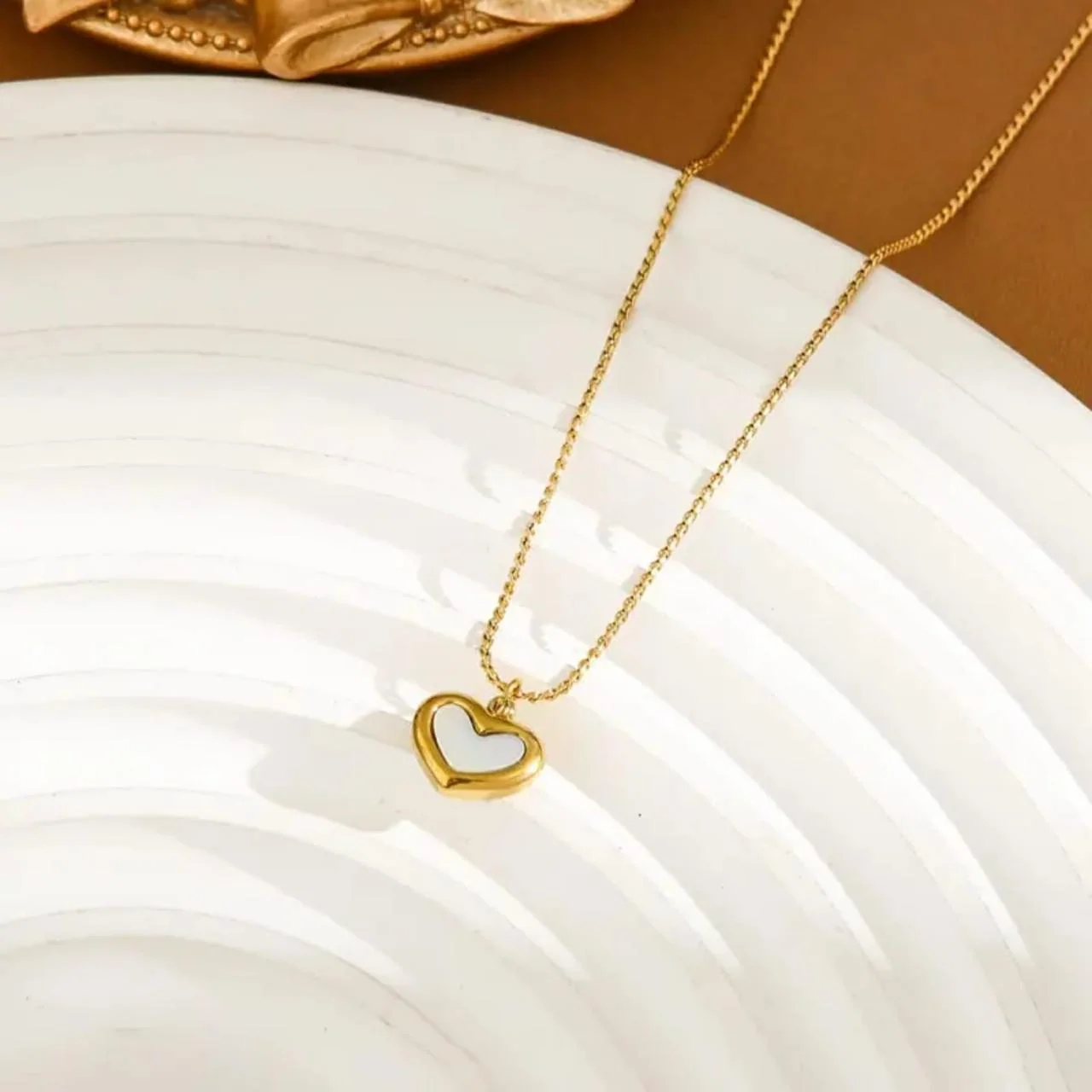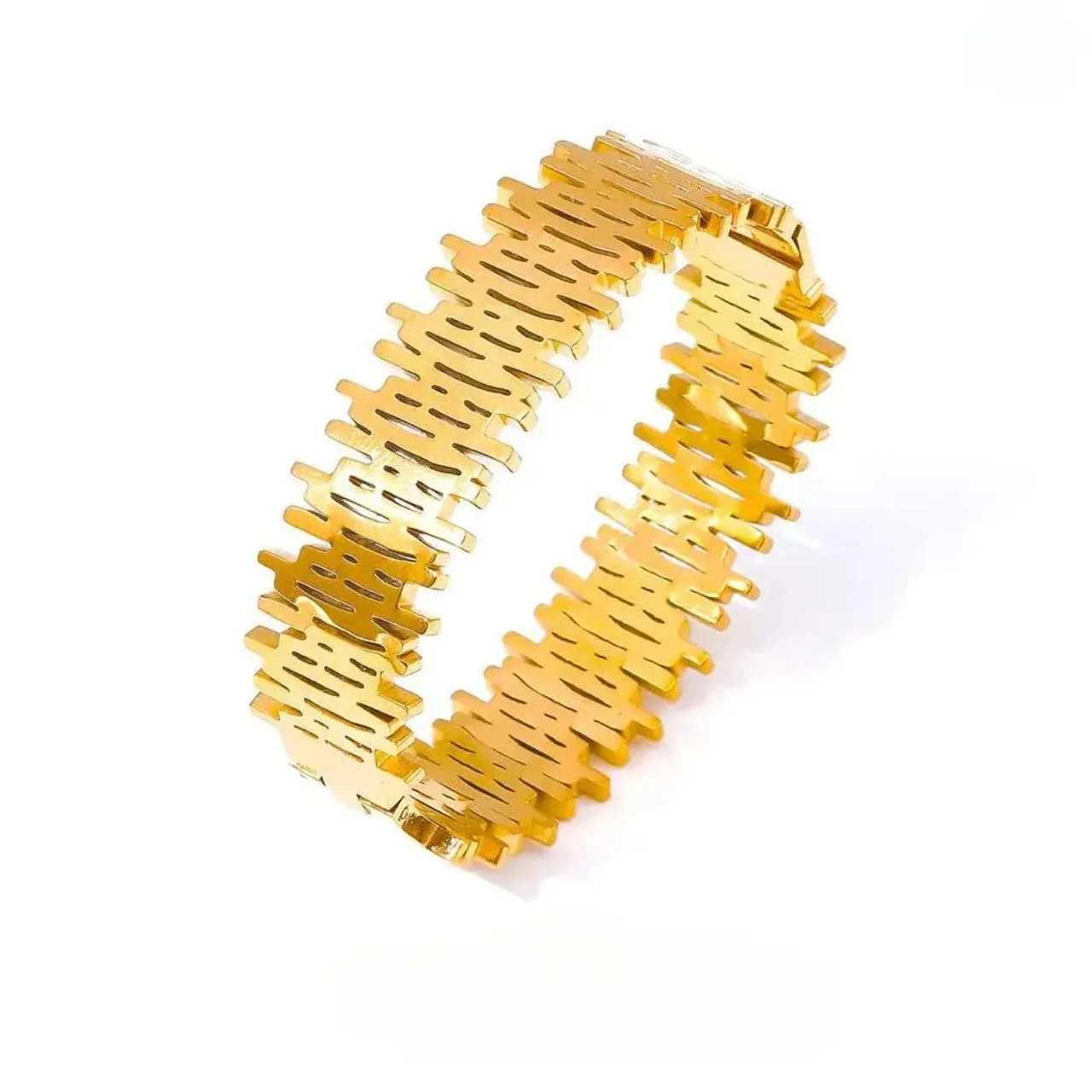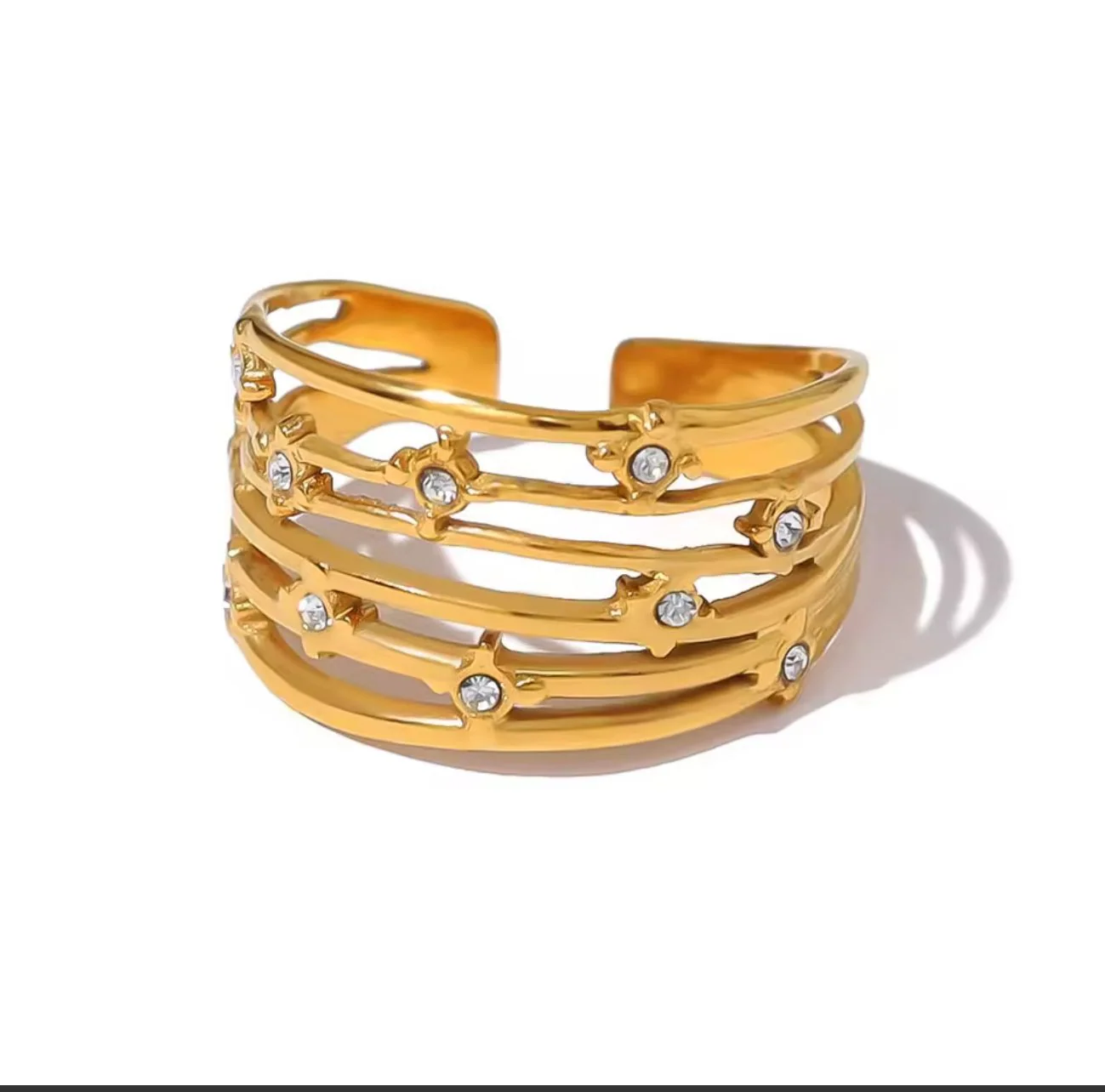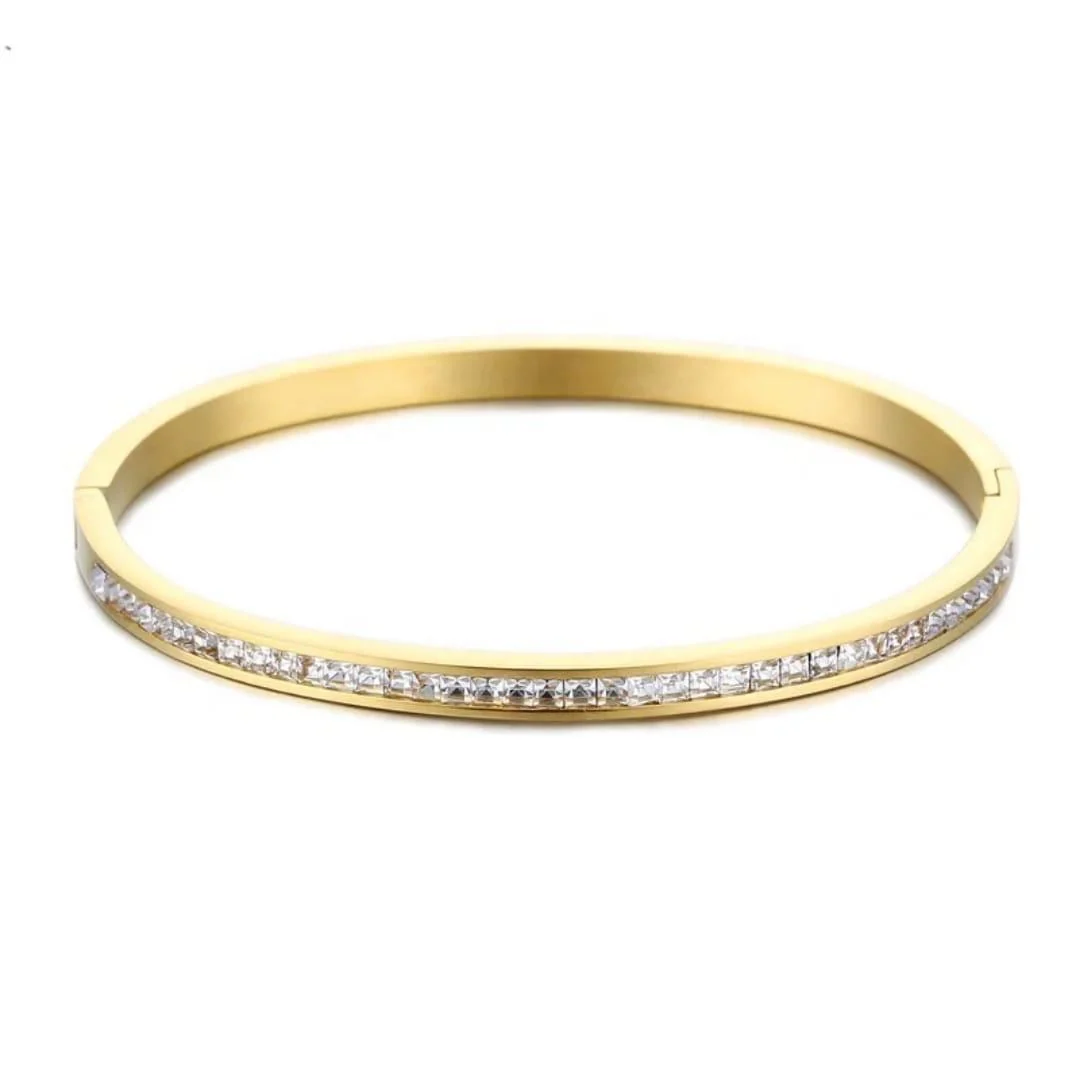
Most collections start with a mood board. Celestia started with a problem: a square-cut crystal we liked that looked wrong on everything we tried it on.
The stone was too big, until the band got thinner
The first samples set the crystal into a band of the same width as the stone. It read as heavy — the sort of piece that photographs well and then sits in a drawer because it catches on every sleeve. The fix was counter-intuitive: rather than shrinking the stone, we narrowed everything around it. A thinner band makes the same crystal look deliberate instead of oversized, and it drops the weight of the finished bracelet by nearly a third.
We did not make the stone smaller. We made everything around it quieter.
Channel setting, because clasps and prongs disagree
Prong settings are beautiful and they are also the single most common reason a bracelet comes back. Prongs sit proud of the band, and a bracelet spends its life being dragged across desks, bags and sleeves in a way a ring never does. Every stone in Celestia is channel-set, sitting flush inside the band, so there is nothing standing above the surface to catch or bend.
Sized for real wrists
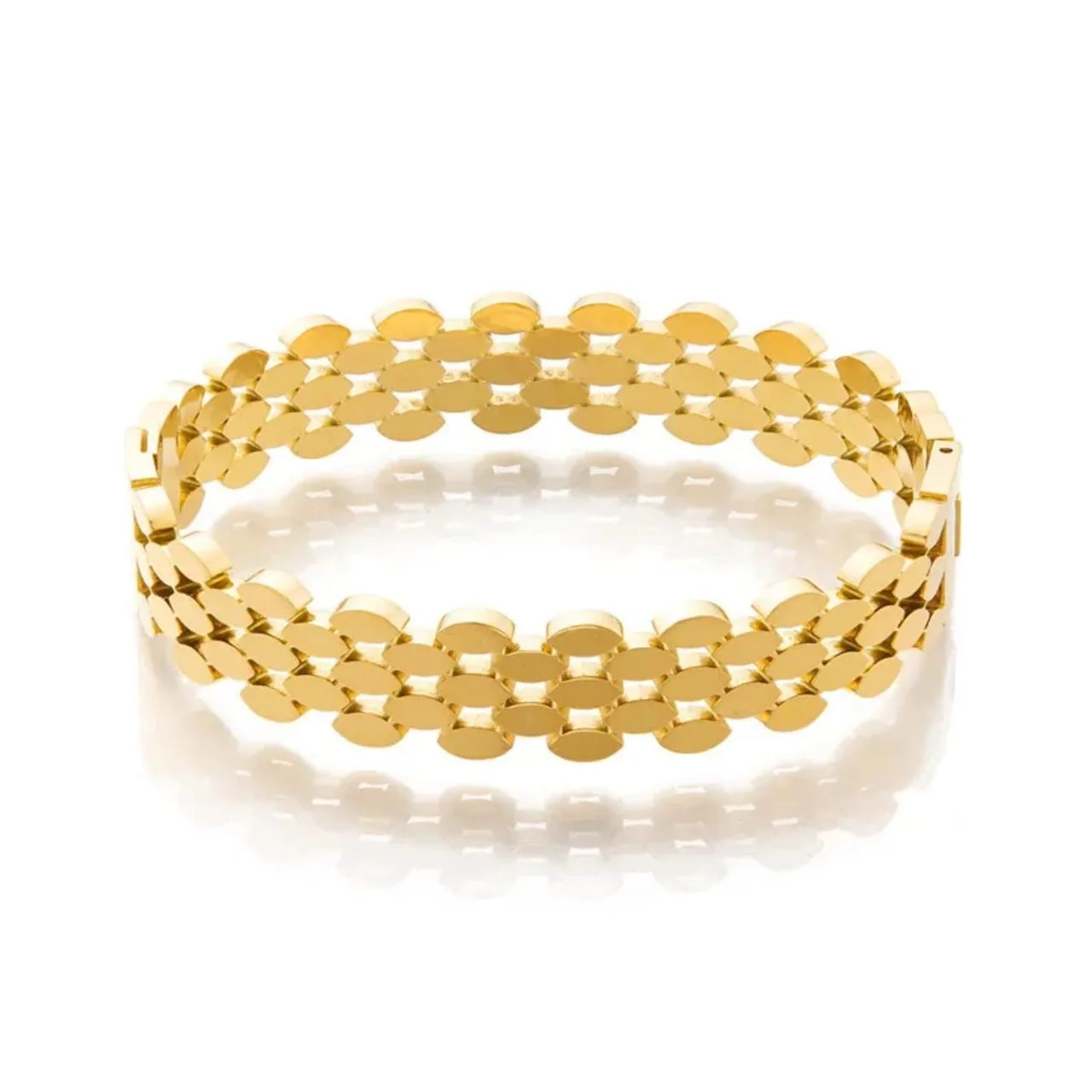
The samples were made to a standard sizing chart, and the chart was wrong for enough people that we re-cut it. Bangles in the collection run slightly larger than the industry standard and the chain pieces carry a longer extender than they strictly need. It costs a fraction more in materials per piece. It costs considerably less than the exchanges it prevents.
What it layers with
Because the bands ended up narrow, the whole collection stacks — which was not the original intention but became the reason it sold. Two Celestia pieces sit together on one wrist without adding up to a cuff, and a plain chain bracelet between them gives the stones room to read individually.
It is a small run and restocks are irregular, which is the honest trade for making them this way. When a batch is gone it is usually gone for a few weeks rather than for good.